
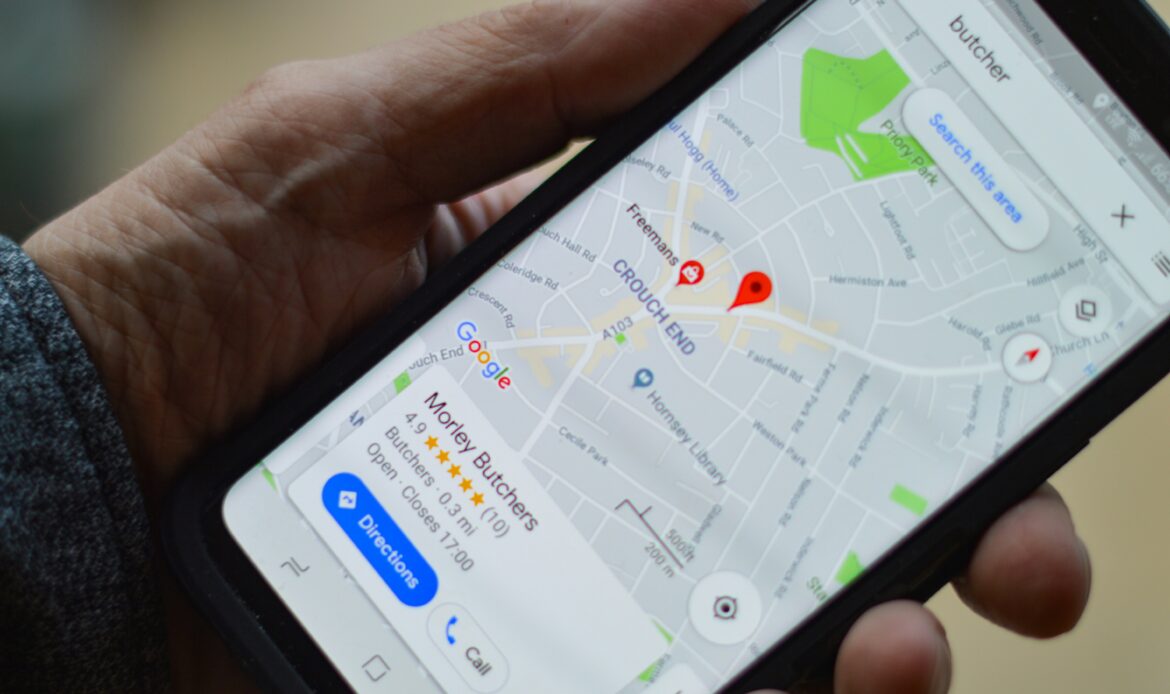

You’ve done the thing where you pull out your phone, type in your own service plus “Houston,” and scroll down to that little box with the map and three businesses in it. And you’re not in it. Three competitors are. One of them you’ve never even heard of. That box is the Houston Map Pack, and for a lot of local businesses it’s where the actual money is.
Not page one of the blue links. That box. It sits above almost everything else, it has your phone number in it, and people tap it without ever visiting a website.
So why isn’t your business there? Usually it’s one of about seven things, and none of them are mysterious. Let’s go through them.
What the Houston Map Pack Is Actually Ranking
Before you can fix it you have to know what you’re being graded on. Google is unusually blunt about this. Their own documentation on improving your local ranking says local results are based on three things: relevance, distance, and prominence.
Relevance is how well your business matches what someone typed. Distance is how far you are from wherever that person is standing. Prominence is how well-known and well-referenced your business is across the web.
Here’s what nobody tells you: in a city like Houston, distance carries enormous weight. We’re spread across roughly 665 square miles. A search from Clear Lake and a search from Cypress are effectively two different markets. If you’re chasing “Houston” as one flat term, you’re competing in dozens of local markets at once and probably losing most of them.
Reason 1: You’re Too Far From the Person Searching
This is the most common one, and the most misunderstood.
There’s an old myth that Google favors businesses near the geographic center of a city. It doesn’t. It favors businesses near the searcher. Someone standing in Katy searching “AC repair near me” is getting Katy results, not downtown results, no matter how good your downtown profile is.
If your shop is off Highway 6 and you’re wondering why you don’t rank for searches happening inside the Loop, that’s why. You’re 22 miles away.
What to do about it:
Stop measuring success by whether you rank for “Houston [your service].” Start measuring by whether you rank in the neighborhoods where your customers actually are. Build real pages for the areas you serve — The Heights, Sugar Land, Pearland, Spring, Bellaire — with content that’s genuinely about serving customers there. Not the same page copied eight times with the city name swapped. Google spots that instantly, and so do customers.
If you’re a service-area business without a storefront, set your service area honestly and let your website and content do the geographic heavy lifting. We break this down further in our guide to how local SEO actually works for Houston businesses.
Reason 2: Your Primary Category Is Wrong
Your primary category on your Google Business Profile is one of the strongest levers you’ve got, and a shocking number of businesses have it set wrong.
The test Google’s guidelines push you toward is simple: your category should complete the sentence “this business is a…” — not “this business has…” or “this business does…”
A roofing company listed as “General Contractor” is going to struggle against roofing companies listed as “Roofing Contractor.” A med spa listed as “Spa” is competing with nail salons instead of the businesses it actually competes with. Same logic across the board.
What to do about it:
Go look at the three businesses currently sitting in the Map Pack for your target search. Find out what primary category they’re using. Then compare it to yours. If there’s a mismatch, that’s likely your single biggest fix, and it takes four minutes.
Add secondary categories too, but keep them relevant. Stuffing in ten loosely related categories dilutes you and can trip Google’s guidelines for representing your business. The local SEO community at Sterling Sky has done a lot of good public work on how these guidelines get enforced in practice — worth a read if you want to go deeper.
Reason 3: Your Name, Address, and Phone Number Don’t Match Across the Web
This one’s boring and it costs businesses rankings constantly.
You moved offices in 2022 and never updated Yelp. Your old suite number is still on your Facebook page. Your website footer says “Ste. 200” and your Google profile says “Suite 200.” You ran a Google Ads campaign and a call tracking number ended up on three directories.
Google is trying to confirm you’re a real, stable, verifiable business. Every conflicting record makes that job harder, and uncertainty doesn’t help you win the Map Pack.
What to do about it:
Pick one exact format for your name, address, and phone number. Write it down. Then go clean up the major directories — Yelp, Bing Places, Apple Maps, Facebook, Angi, BBB, and whatever industry-specific ones matter in your vertical. Consistency matters more than volume here. Fifty clean citations beat three hundred messy ones.
This is one of the first things we look at in a real local SEO audit, because it’s so often the quiet reason a business is stuck.
Reason 4: Your Reviews Went Quiet
Review count matters. Review velocity matters more than people realize.
A Houston business with 180 reviews, 170 of which came in before 2021, looks stale next to a competitor pulling in six or seven a month. Google is looking for signs of ongoing, active, real-world business. A dead review profile is a signal, just not the one you want.
Ratings matter, recency matters, and whether you respond matters. Copy-pasted “Thank you for your feedback!” replies on forty reviews in a row read exactly like what they are.
What to do about it:
Build an actual system for asking. Not a guilt trip, not a bribe — a system. Send the request while the job is fresh, make the link one tap, and ask consistently instead of in panicked bursts when rankings dip. We wrote a full playbook on getting more Google reviews without begging for them.
Reason 5: Your Website Isn’t Backing Up Your Profile
People treat the Google Business Profile as a standalone thing. It isn’t. Google cross-checks what your profile claims against what your website and the rest of the internet say about you.
If your profile says you’re a Houston plumbing company but your website has one thin “Services” page with no location signals, no service-specific pages, and no structured data, you’ve given Google nothing to corroborate.
What to do about it:
Make sure your website has real pages for your real services, with your city and service area referenced naturally in the copy. Add LocalBusiness structured data so your name, address, phone, and hours are machine-readable and match your profile exactly. Get your business mentioned on other Houston websites — a chamber, a supplier, a local sponsorship, a neighborhood association.
Prominence is built off-site. That part can’t be shortcut from inside your profile dashboard.
Reason 6: You Have a Duplicate or a Soft Suspension
Sometimes the profile is fine and something else is wrong under the hood.
Duplicate listings split your signals. Two profiles for the same business means reviews land on one, links land on the other, and neither one is strong. This happens a lot with businesses that changed names, moved, or had a well-meaning employee create a second listing years ago.
Soft suspensions are sneakier. Your profile still shows up when you search your own business name, so it looks fine, but it’s been quietly pulled from Maps and the local pack. Usually the trigger is a guideline violation — keyword stuffing in the business name is the classic one. “Joe’s Plumbing | Best Houston Plumber 24/7” is asking for it.
What to do about it:
Search your business name and address on Google Maps and see if more than one version of you exists. If it does, request the duplicate be removed or merged. If you suspect a suspension, review Google’s full policies and guidelines before filing a reinstatement request, and fix the violation first. Filing without fixing usually gets you denied.
Reason 7: You’re Checking Your Rankings Wrong
Real talk: a lot of “I don’t rank” panic is a measurement problem.
Google personalizes local results by physical location. Searching from your office will show you your own business more often than a customer three neighborhoods over would see it. Incognito mode doesn’t fix this — it strips your search history, not your location.
What to do about it:
Use a geo-grid rank tracker that checks your position from dozens of points across the metro. You’ll see the truth immediately: you probably dominate a two-mile radius and disappear beyond it. That’s normal, and it tells you exactly where to focus.
If you’re evaluating help with this, our breakdown of what to watch for when hiring a Houston SEO company covers how reporting should actually be done.
How to Fix Your Houston Map Pack Rankings, In Order
You can’t do all of this in one weekend, and you shouldn’t try. Here’s the sequence we’d run:
Weeks 1–2. Fix your primary category. Verify your profile. Fill out every field — description, hours, services, attributes, opening date. Add real photos, not stock. Kill any duplicate listings.
Weeks 3–6. Clean up NAP across major directories. Add or fix LocalBusiness schema on your site. Start the review request system and don’t stop.
Weeks 7–12. Build genuine service-area pages for the neighborhoods you actually serve. Go get local links and mentions. Publish content that answers questions your customers actually ask.
Then measure. Not rankings alone — calls, direction requests, form fills. Rankings that don’t produce calls aren’t worth celebrating.
How Long Before You See Movement?
Category fixes and duplicate removals can move things in days to a few weeks. NAP cleanup and review velocity tend to show up over one to three months. Prominence work — links, mentions, content depth — is a six-month-plus play in a market as competitive as Houston.
Anyone promising you the Map Pack in 30 days is selling something. We’ve written about why guaranteed local SEO promises don’t hold up if you want the longer version of that argument.
Frequently Asked Questions
Can I rank in the Map Pack without a physical address?
Yes. Service-area businesses can hide their address and define a service area instead. You’ll generally have a harder time than a business with a verified storefront in the same neighborhood, so your website and prominence signals have to work harder.
Does posting on my Google Business Profile help rankings?
Posts aren’t a strong direct ranking factor, but they help conversions and they signal an actively managed profile. Cheap to do, worth doing.
Why does a competitor with fewer reviews outrank me?
Almost always proximity or category. They’re closer to the searcher, or their primary category matches the query more precisely than yours does. Check both before you assume it’s reviews.
Should I put keywords in my business name?
No. It’s a guideline violation and it’s one of the most commonly reported issues in local search. Your competitors can and do report it.
If You Want Help With This
Most Houston businesses stuck outside the Houston Map Pack aren’t stuck because of anything exotic. It’s a wrong category, a stale review profile, a duplicate listing nobody noticed, and a website that isn’t confirming what the profile claims.
We fix that for a living. If you’d rather have someone diagnose it than guess at it, get in touch with SEO Impact Pros or call (832) 962-2367. We’ll tell you what’s actually wrong, whether or not you hire us.