
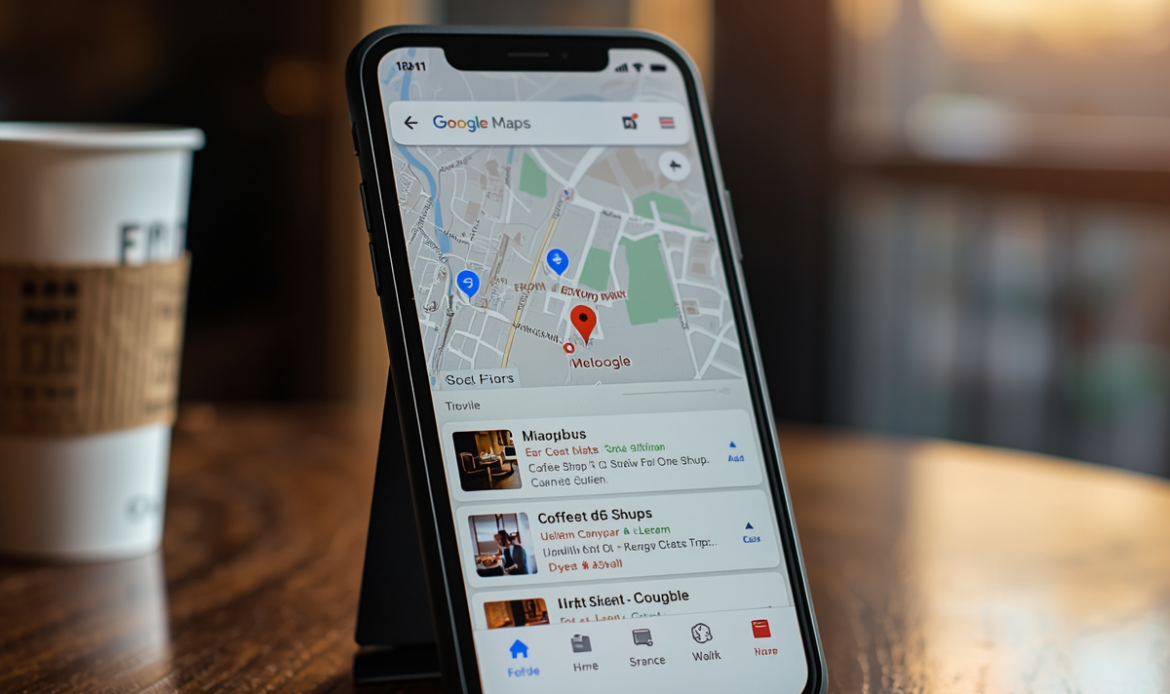
A Houston owner can search for a service, see three competitors in the map pack, and wonder why their company is nowhere in sight even though the website looks better. Understanding Why Some Houston Businesses Rank on Google Maps and Others Don’t starts with knowing that Google judges far more than a homepage, including business information, proximity, profile quality, and trust signals across the web. This guide explains how Google Maps visibility actually works, where Houston companies usually lose ground, and what to fix first.
What “Ranking on Google Maps” Really Means
Ranking on Google Maps does not mean one single position across all of Google. It can refer to the map pack in the main SERP, the full Google Maps app or browser results, or local organic listings below the map, and each surface uses overlapping but not identical signals.
For most Houston businesses, being outside the top three feels like not ranking at all because click-through rates drop sharply after the visible map pack. A company sitting at positions four through ten may technically appear in Google Maps, yet it receives a fraction of the calls, direction requests, and site visits captured by the top three.
That gap matters because owners often misdiagnose the problem. They assume they are invisible when the real issue is low visibility on the highest-attention placements, which changes the strategy from “get listed” to “earn top-three relevance and trust.”
Map Pack vs. Google Maps vs. Local Organic
Houston Google Maps rankings depend on more than just having a website. The map pack appears in Google search results, while the full Google Maps interface displays a larger set of local businesses. Local organic results are traditional website listings influenced by local intent.
Google Business Profile insights can show how users discover and interact with a listing. However, those numbers make more sense when you separate which search surface generated the action.
Google explains local ranking concepts on support.google.com. The main takeaway is simple. A strong website can improve local organic visibility, while a weak Google Business Profile can still hurt map pack performance. Many Houston businesses underperform because they treat Maps and website SEO as completely separate strategies.
Why Rankings Look Different for Every Searcher
Google recalculates local results based on proximity, device, search history, and wording, so two people in Houston can search the same phrase and see different businesses. A user in The Heights searching “coffee shop” sends a different local intent signal than someone in Sugar Land using the same words.
Incognito mode removes some personalization, but it does not erase location context or fully simulate a neutral market test. Better tracking comes from grid-based local rank tools, Google Business Profile insights, and real conversion data instead of one manual search from one phone.
Google’s Local Ranking Factors: Relevance, Distance, and Prominence
Google publicly explains local ranking factors through relevance, distance, and prominence. That framework still explains most Houston Google Maps rankings today. Many businesses struggle because they overinvest in one area, usually website SEO or reviews, while ignoring how distance affects local visibility.
Distance is especially important in a large city like Houston. A business may be highly relevant and well reviewed, yet still lose visibility across town because Google prioritizes convenience and local proximity.
Prominence acts as the balancing factor. Reviews, citations, links, and brand recognition help Google determine whether a business is trusted enough to earn visibility when proximity alone does not decide the outcome.
Relevance: Matching the Query to Your Business
Relevance starts with whether your listing actually matches what the searcher wants. If a company chooses “air conditioning contractor” but users mostly search “HVAC repair,” Google may see a weaker fit unless the category, services, and profile content reinforce that intent.
Services, products, and attributes help Google understand specialization without resorting to keyword stuffing. The smartest Houston profiles use precise service language that mirrors real demand, which is one reason category strategy often moves rankings faster than cosmetic profile edits.
Distance: Why You Can’t “Dominate All of Houston”
Distance decay means visibility weakens as the searcher gets farther from the business, and city limits do not override that pattern. A company near Memorial may rank strongly nearby and disappear for searches originating in Clear Lake, even if both locations are technically in Greater Houston.
That is why realistic local SEO plans focus on neighborhoods, corridors, and service clusters instead of vague citywide promises. Businesses that want to improve google local ranking performance need to define where they can credibly compete, not where they wish to appear.
Prominence: The Local Signals Most Businesses Underestimate
Prominence combines review quality, brand mentions, citations, links, and offline reputation into a trust profile Google can evaluate. Businesses with strong local press, active reviews, and consistent directory mentions often perform better in Houston Google Maps rankings than quieter competitors offering similar services.
Prominence can sometimes overcome proximity disadvantages, but not everywhere. In Houston, it works best inside a realistic service radius instead of as a way to bypass geography completely.
Google Business Profile Setup Problems That Hold Houston Companies Back
Many Houston companies lose Maps visibility because their Google Business Profile sends mixed signals before Google even evaluates the website. Small setup errors can suppress relevance, reduce trust, and create ranking volatility that no amount of content marketing can fully offset.
A common pattern is a profile that was claimed years ago, lightly filled out, and never reviewed again. Google rewards operational accuracy, so stale profiles often stagnate while more disciplined competitors gain ground.
Primary Category and Secondary Categories
The primary category is one of the strongest relevance signals in local search. If the category does not match the core query, even a profile with many reviews can underperform a competitor whose category is better aligned.
Secondary categories help define breadth, but they should support the real offer instead of chasing every adjacent service. Competitor research is useful here because it reveals how top-ranking Houston listings classify themselves for the same buyer intent.
Inconsistent Business Info (NAP) Across the Web
Mismatched name, address, and phone details weaken confidence in a business entity. When Google sees conflicting citations, it may hesitate to rank the listing aggressively because the underlying business information looks unresolved.
The fastest gains usually come from fixing major data aggregators, top directories, and the website footer before chasing minor listings. Businesses handling local SEO busy houston businesses often benefit from this priority order because it concentrates effort where trust signals matter most.
NAP consistency means your business name, address, and phone number stay identical across your website, directories, and Google Business Profile. Even small differences can weaken trust signals and create confusion for Google.
GBP Completeness That Actually Matters
Completeness is not about filling every field just for the sake of it. Accurate business hours, services, products, attributes, and appointment links help Google better understand the business. They also make it easier for users to take action, which can support Houston Google Maps rankings over time.
An accurate appointment URL can improve conversions because visitors can quickly schedule services without searching through the website.
Business name spam creates long-term risk. Listings stuffed with extra keywords may face suspension issues, and suspended profiles often lose far more visibility than they gain.
A Google Business Profile that is not fully verified may also struggle to appear consistently in local search results. Verification helps Google confirm the legitimacy of the business.
Service-Area Businesses (SABs): Why Visibility Drops Outside Your Core Radius
A service-area business often struggles more than a storefront because Google has less location certainty to anchor the listing. When an address is hidden, users and algorithms rely more heavily on service definitions, proximity patterns, and prominence signals to decide whether the business belongs in local results.
That does not mean SABs cannot rank well. It means they need tighter market focus, stronger proof of local relevance, and more disciplined profile management than businesses with a visible storefront.
How Service Areas Affect Map Rankings
Service areas are not target zones that automatically create rankings. If a plumber selects all of Houston plus surrounding suburbs, Google does not treat that as evidence of local authority in every neighborhood.
Overly broad settings can dilute positioning and confuse users who expect a truly local provider. A tighter service-area business profile usually aligns better with how Google interprets practical coverage.
Houston Reality Check: Size, Traffic, and Neighborhood Intent
Houston search behavior is hyper-local because traffic, travel time, and neighborhood identity shape buying decisions. Someone in The Heights, Montrose, or Katy often searches with area modifiers, and Google responds by favoring businesses that look closest and most relevant to that submarket.
That is why citywide visibility claims often collapse in real-world testing. For service brands investing in SEO services for houston businesses, neighborhood-level relevance usually produces better returns than broad metro targeting.
Search behavior also changes across areas like River Oaks, the Medical Center, the Energy Corridor, Sugar Land, and Clear Lake because local competition and proximity vary across Houston neighborhoods.
On-Profile Activity Signals: Reviews, Photos, Posts, and Q&A
Google does not rank profiles solely on activity, but fresh engagement supports prominence and improves conversion once the listing is visible. A profile with recent reviews, current photos, and active Q&A looks operationally alive, which matters in categories where trust and responsiveness drive clicks.
This is also where many Houston businesses leave easy wins on the table. They claim the profile, stop updating it, and then wonder why a less polished competitor earns more calls.
Reviews: Velocity, Recency, and Responses
Houston Google Maps rankings are heavily influenced by review velocity and review recency because both signals show ongoing customer activity instead of a reputation built years ago. A steady stream of legitimate reviews is usually more trustworthy than a sudden burst. Review responses also show users and Google that the business stays engaged.
Responses should be thoughtful, brief, and natural. Strong review responses can improve trust at the moment of decision, which often helps businesses increase map pack conversions.
Why Click-Through Rates Matter in the Local Pack
Getting seen in the local pack is only part of the equation. Businesses also need strong CTR, or click-through rate, because Google measures how users interact with listings. If people repeatedly click one profile, request directions, visit the website, or make phone calls, Google may interpret that listing as a stronger result.
Photos, review quality, business descriptions, and accurate star rating information can influence whether users choose your listing over a competitor’s. Even small improvements to a Google Business Profile can increase engagement over time.
Photos and Videos: Proof Beats Claims
Photos and videos work because they verify reality better than marketing copy. Geo-relevant job photos, staff images, fleet shots, and updated storefront visuals give searchers evidence that the business actually operates where it says it does.
Old media can quietly hurt performance by making the company look inactive or outdated. Businesses that pair fresh visuals with content marketing houston often create a stronger local brand footprint than competitors relying on text alone.
Some marketers discuss geo-tagging images for local SEO, although profile quality, relevance, and customer engagement typically have a much stronger impact on rankings.
GBP Posts and Q&A: Often Ignored, Sometimes Decisive
Google Posts can highlight offers, seasonal services, and timely updates that increase engagement when buyers compare similar listings. They rarely rescue a weak profile by themselves, but they reinforce freshness and can improve click behavior in close contests.
Q&A is even more important because unanswered questions create friction and misinformation. Seeding common questions and monitoring answers protects lead flow in a way many owners underestimate.
Website and Off-Site Signals That Support Map Rankings
Maps is not only a Google Business Profile contest. Your website and off-site footprint help Google confirm what the business does, where it operates, and whether the brand is established enough to trust.
That matters most in competitive Houston categories where several listings have similar reviews and similar proximity. In those cases, website clarity, citations, and local mentions often become the deciding layer.
Local Landing Pages and On-Page Local SEO
Strong service pages explain what a business does, where it operates, and why the service fits local demand. Neighborhood pages can also help when they provide useful information. However, thin duplicate pages often weaken trust instead of expanding reach.
The best local pages include matching NAP details, embedded maps when appropriate, and language that reflects how Houstonians actually search. Strong website structure often supports Houston Google Maps rankings, especially when the website and Google Business Profile reinforce the same local signals.
Citations, Links, and Brand Mentions
High-quality citations validate core business data and reinforce category relevance. Local links from chambers, trade groups, sponsorships, and community organizations add a layer of prominence that generic directory submissions cannot match.
Brand mentions matter even without a direct link because they help establish entity recognition. Businesses evaluating why SEO impact pros is the best SEO company for local businesses often focus on this exact difference between superficial SEO activity and durable local authority.
Structured Data and Technical Trust
LocalBusiness schema helps search engines parse NAP, services, and location details consistently. Schema does not guarantee rankings, but it reduces ambiguity, which is valuable when Google compares similar local entities.
Technical issues also affect local performance through conversion loss. A slow page, broken form, or incorrect tracking number can waste map visibility even if rankings improve.
Houston Examples: Why One Business Wins the Map Pack and Another Doesn’t
Most ranking differences are not mysterious. They come from a few visible tradeoffs between category fit, distance, profile quality, and prominence.
Google Ads can increase paid exposure, but ads do not replace the local signals needed for organic Maps visibility. A business buying clicks while neglecting profile quality often pays for traffic that a stronger local presence could have earned more efficiently.
Some companies rely heavily on PPC campaigns for visibility, although paid advertising alone does not improve organic Google Maps rankings.
Scenario 1: Two Similar Businesses, Different Primary Categories
Business A and Business B both repair air conditioners in Houston, but Business A uses the primary category that matches the search query while Business B chose a broader category years ago. Business A ranks because Google sees tighter relevance immediately.
The fix is straightforward: align categories, services, and supporting website copy with actual search intent. That change often improves visibility faster than publishing another generic blog post.
Scenario 2: Strong Website, Weak GBP Activity
One company has excellent pages and solid backlinks, but its profile has few recent reviews, old photos, and incomplete service details. A competitor with a weaker site can still win the map pack because the listing looks more active, trusted, and conversion-ready.
The solution is operational, not theoretical. Build a review request process, add fresh media, answer Q&A, and keep profile details current.
Scenario 3: SAB Trying to Rank Citywide
A service-area company wants to rank across all of Houston, but visibility fades quickly outside its home base. Distance and competition density limit reach, especially when the business lacks strong local signals in outer neighborhoods.
The better approach is to win core areas first, then build prominence and supporting local pages around adjacent zones. That is usually how sustainable local expansion actually happens.
Common Mistakes That Prevent Google Maps Rankings
Some businesses sabotage themselves with shortcuts that create long-term instability. The most common examples are fake suite numbers, incorrect tracking numbers, duplicate listings, and the assumption that paid media can substitute for local trust.
These issues matter because Google values identity consistency. When the platform sees conflicting or manipulative data, it becomes less willing to reward the listing with strong visibility.
Spam Tactics That Backfire
Name spam and fake addresses may produce temporary gains, but they expose the profile to edits, suspensions, and competitor reports. Once trust is damaged, recovery is slower and more expensive than building the listing correctly from the start.
Sustainable alternatives are less flashy but more durable: better categories, fuller services, stronger reviews, and legitimate local PR. That approach compounds instead of collapsing.
Data Hygiene Issues: Duplicates and Old Listings
Duplicate listings split authority and confuse Google about which entity should rank. Old addresses, retired practitioner profiles, and outdated phone numbers also hurt conversions because users contact the wrong location or lose confidence.
Cleaning these records is often one of the highest-return local SEO tasks. A business cannot build stable visibility on top of unresolved identity data.
A Practical Checklist to Improve Your Houston Google Maps Visibility
Most Houston businesses should fix relevance and trust before investing in advanced tactics. The fastest wins usually come from category alignment, NAP cleanup, review systems, and profile completeness.
Progress should be measured across calls, direction requests, form leads, and visibility trends, not one screenshot from one zip code. Local search is variable by design, so smart measurement looks for patterns rather than perfection.
Week 1: Fix the Foundation
Audit your primary and secondary categories, services, business hours, attributes, appointment link, and website URL. Then make sure the website URL, phone number, and address match across your site and top directories exactly.
Claim or verify the profile if needed, remove obvious inconsistencies, and document all current listings. This first week often solves the hidden trust problems that suppress rankings before strategy even begins.
Weeks 2–4: Build Trust and Activity
Launch a simple review request system and create a response process your team can maintain. Add fresh photos, publish Google Posts, and monitor Q&A so the profile reflects current operations rather than last year’s reality.
This stage is where many businesses begin seeing better engagement before rankings fully stabilize. Google often rewards consistency more than sporadic bursts of activity.
Month 2+: Grow Prominence
Earn local links and mentions through sponsorships, chambers, partnerships, and community coverage. Improve service-page depth so the site reinforces the same local themes your profile is signaling.
Track calls, direction requests, bookings, and form submissions through GBP insights and analytics. If you need outside help, a Houston agency with real local experience can shorten the learning curve and prevent expensive mistakes.
FAQs
Why are some businesses not on Google Maps?
The most common reasons are an unverified, suspended, or ineligible Google Business Profile. Incorrect address details, poor business information, and unresolved duplicates can also keep a listing from appearing.
How do I get my business ranked higher on Google Maps?
Improve relevance with the right categories and services, strengthen prominence through steady reviews and local links, and keep NAP consistent everywhere. Proximity still limits how broadly you can rank, especially in a large market like Houston.
Is there anything more accurate than Google Maps?
For navigation, Apple Maps and Waze can be useful depending on traffic data and update speed. For local business discovery, Google Maps is still the most widely used platform, though accuracy depends on the quality of the underlying data.
How does Google rank local businesses?
Google primarily uses relevance, distance, and prominence. Those signals are shaped by your Google Business Profile, reviews, citations, website quality, and the consistency of your broader web presence. Together, these factors strongly influence Houston Google Maps rankings.
Houston businesses that rank well on Google Maps usually execute the basics more consistently than competitors. When categories, profile quality, reviews, website signals, and local trust all align, Google has a clearer reason to rank the business higher.