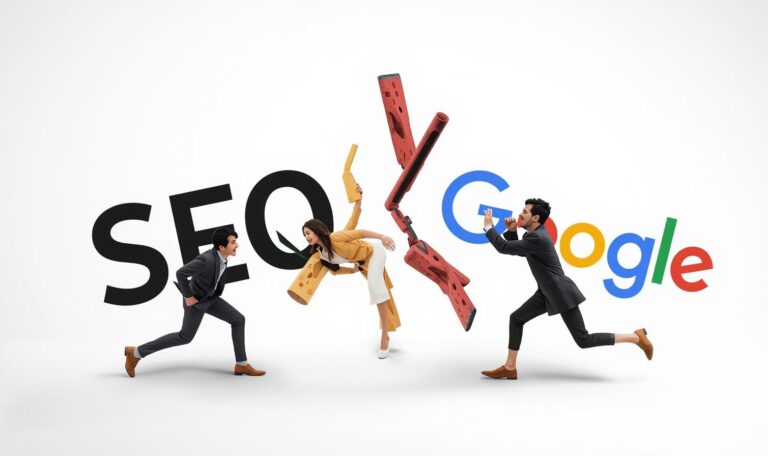
Most small businesses comparing SEO vs Google Ads do not have a traffic problem first. They have a timing problem, a budget problem, or a conversion problem. That is why this debate matters so much in small business marketing. One channel can produce immediate leads within days, while the other can build durable search visibility that keeps working long after the initial investment. Quick Verdict: SEO vs Google Ads Google Ads wins on speed to results, targeting control, and short-term testing. SEO wins on long-term value, trust, and lower marginal customer acquisition cost once organic rankings begin to hold. Bottom line: if you need leads this month, Google Ads is usually the better first move. If you want compounding organic traffic and less dependence on paid media over time, SEO is usually the stronger long-term investment. Most small businesses should not try to do everything at once. The smarter move is to prioritize the channel that solves the biggest current constraint, then layer in the second channel when budget, operations, and website readiness improve. Bottom Line by Business Goal For immediate leads, Google Ads is the clear winner. Paid search can place your business at the top of the SERP quickly, especially for transactional intent and high-intent keywords. For compounding visibility and lower long-term acquisition cost, SEO wins. Search engine optimization builds organic listings, branded search growth, and broader coverage across commercial intent and informational intent. Best Fit by Timeline and Budget Google Ads fits urgent demand capture, new launches, promotions, and seasonal campaigns. It is also a strong option when a business needs market validation before investing heavily in content marketing or link building. SEO fits businesses that can invest consistently for 6 to 12 months. If your company has a solid website foundation and can support ongoing technical SEO, on-page SEO, and local SEO work, the payoff can be substantial. Head-to-Head Comparison Table: SEO vs Google Ads Feature/Category SEO Google Ads Speed to results Slow to build, often 3 to 12 months Fast, often same day or same week Upfront cost Higher setup for audits, content, fixes Lower setup possible, but spend starts immediately Ongoing cost Monthly retainer or project-based work Ongoing ad spend plus management Traffic durability Can continue after work is published Stops when campaign budget stops Targeting precision Broad visibility through search queries Strong keyword targeting and audience targeting Trust and click behavior Often higher trust in organic listings Premium ad placements at top of page Reporting speed Slower feedback loop Fast reporting and conversion tracking Local visibility Strong with Google Business Profile and map pack Strong with radius targeting and call extensions Scalability Builds over time through content and backlinks Fast scaling if CPC and ROI allow Branded search support Strengthens branded search over time Protects brand terms instantly Non-branded search support Excellent for long-tail keywords and evergreen content Strong for immediate demand capture Results when spending stops Rankings may remain Traffic usually stops Recommended Comparison Rows The table above covers the questions most owners ask first: speed to results, cost structure, search visibility, reporting, and sustainability. It also shows a key difference many competitors gloss over: SEO and Google Ads behave very differently once spending pauses. SEO can still generate website traffic after content is indexed and rankings stabilize. Google Ads is more direct, but results stop when ad spend stops. Speed to Results: SEO vs Google Ads If speed is the deciding factor, Google Ads usually wins by a wide margin. A properly built PPC campaign can start generating clicks, calls, and form fills the same day. SEO takes longer because Google needs time for indexing, content evaluation, local relevance signals, internal linking, and website authority growth. In competitive markets, meaningful movement can take months rather than weeks. Fast results still depend on execution. A weak landing page, poor conversion rate, sloppy bidding, or bad keyword targeting can waste money quickly. SEO timing also varies. A local service-area business in a lower-competition market may gain traction faster than a national brand competing for expensive non-branded search terms. When Fast Results Matter Most Google Ads is often the better choice for: Paid search often works as the bridge while SEO ramps up. That is especially true when a business has little existing authority, weak local citations, or no strong content assets. Why SEO Takes Longer SEO depends on several moving parts: The tradeoff is simple. SEO is slower to start, but once rankings improve, the traffic can become far more durable. Cost Structure and ROI: SEO vs Google Ads SEO and Google Ads spend money in very different ways. SEO usually involves a monthly retainer or project fees for audits, technical fixes, content, optimization, and reporting. Google Ads uses a pay-per-click model. You pay for clicks, plus management fees if an agency or consultant runs the account. That difference matters because PPC costs can rise quickly with competition and CPC inflation. SEO costs are often steadier month to month, though the work can be heavier early on if the site has major technical issues. ROI should not be judged by website traffic alone. The better measurement is customer acquisition cost relative to lifetime value, conversion rate, and lead quality. A local law firm might pay very high CPCs for paid search, while a local cleaning company may face lower click costs. The same pattern applies to SEO, where competition, geography, and scope affect pricing. What Small Businesses Actually Pay For For SEO, businesses commonly pay for: For Google Ads, businesses commonly pay for: Category Winner Callout For short-term ROI testing, Google Ads usually wins. As a result, it gives faster data, tighter budget control, and quicker attribution. On the other hand, for long-term cost efficiency, SEO usually wins. Over time, once organic traffic grows, the effective cost per visit and cost per lead often fall below paid search Lead Quality and Search Intent: SEO vs Google Ads Both channels can attract high-quality leads. The difference is how they match search intent across the buyer..